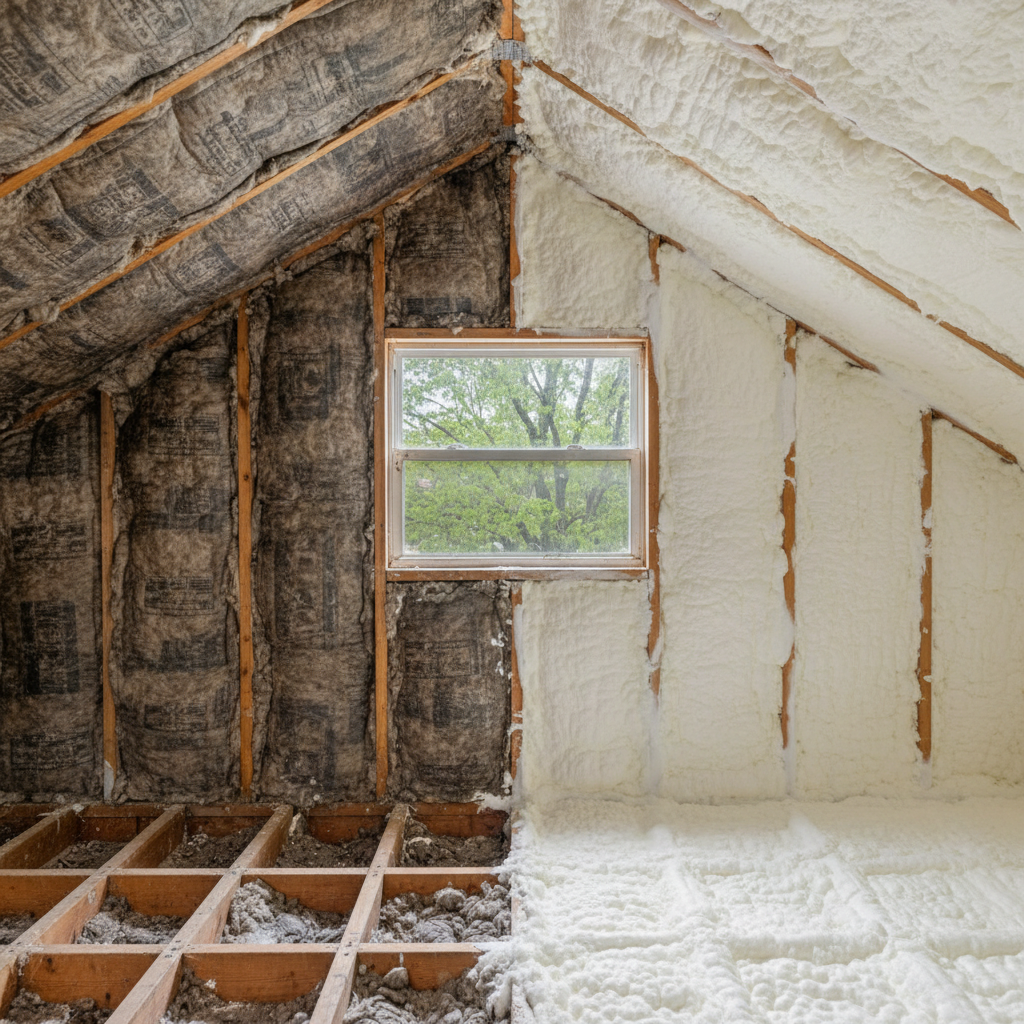
Most homeowners in Wheaton do not think about spray foam until their energy bills spike or a winter draft gets annoying. When you finally decide to upgrade your insulation, you will quickly realize that open-cell spray foam is not a one-size-fits-all product. You have choices to make regarding densities, application thicknesses, and specific product formulations. If you live around Arrowhead or own one of the older Victorians closer to downtown, getting this right matters. Elite Insulation Company breaks down the two main approaches to open-cell spray foam so you can figure out what fits your house without wasting money.
Standard Half-Pound Foam vs. Newer Low-Density Formulas
The traditional approach uses standard half-pound per cubic foot open-cell foam. It expands significantly, often up to 100 times its original liquid volume, filling every single nook and cranny in your framing cavities. This creates an airtight seal that stops air leakage. It is breathable enough to let moisture escape if it happens to get in, which is great for our fluctuating humidity here in DuPage County.
On the other side, newer low-density specialty formulas are also available. These are engineered to cure slightly softer or provide enhanced sound dampening between interior walls. But these options do not always offer the exact same structural rigidity or R-value per inch as traditional half-pound mixes. Elite Insulation Company sees many homeowners get talked into these newer options by marketing, only to find out they did not need the extra features.
Cost and Upfront Investment
Standard half-pound open-cell foam is generally the more budget-friendly route. Because it has been the industry standard for decades, material costs are stable, and most experienced crews can spray it fast. It gives you a high R-value per dollar compared to closed-cell, making it a favorite for attic rooflines and large wall cavities.
Specialty or proprietary open-cell formulations usually cost more per board foot. You are paying a premium for brand names or niche performance metrics like ultra-low VOC emissions during curing. If you are on a strict renovation budget, that extra cost rarely translates to a noticeable drop in your monthly utility bill.
Durability and Maintenance Through Wheaton Seasons
Wheaton weather puts buildings through difficult conditions. We get freezing winter sub-zero snaps, heavy spring rains, and humid July heatwaves that make your air conditioner work overtime. Standard open-cell foam handles these extremes well as long as it is kept dry. It does not shrink or sag over time if installed correctly by a crew that knows how to mix chemicals on-site.
Maintenance is straightforward for both approaches: do not let a roof leak drip onto it indefinitely. Open-cell foam acts like a sponge if it gets soaked from a failing shingle or plumbing leak. It will hold water, which can rot your wooden framing before you even notice a stain on the drywall. Neither approach fixes a leaky roof, and homeowners must patch the exterior first.
Appearance and Finishing Details
Once it is sprayed, open-cell foam expands past the wood studs and gets trimmed flush with a special saw. Standard foam leaves a matte, textured surface that is ready for drywall or remains hidden in an unfinished attic. Some specialty foams cure with a smoother face or a slightly different color tint, but once you cover it up with drywall, the appearance is no longer visible.
My Honest Recommendation for Local Homes
If you are trying to decide between traditional half-pound open-cell foam and a specialized alternative, go with the proven standard half-pound product for your attic roofline or interior walls. It saves you money upfront, provides incredible air sealing against those biting northwest winds blowing across the prairie, and has a track record that speaks for itself. Elite Insulation Company recommends sticking to what works, hiring a local crew that stands behind their work, and keeping your Wheaton home comfortable year-round.