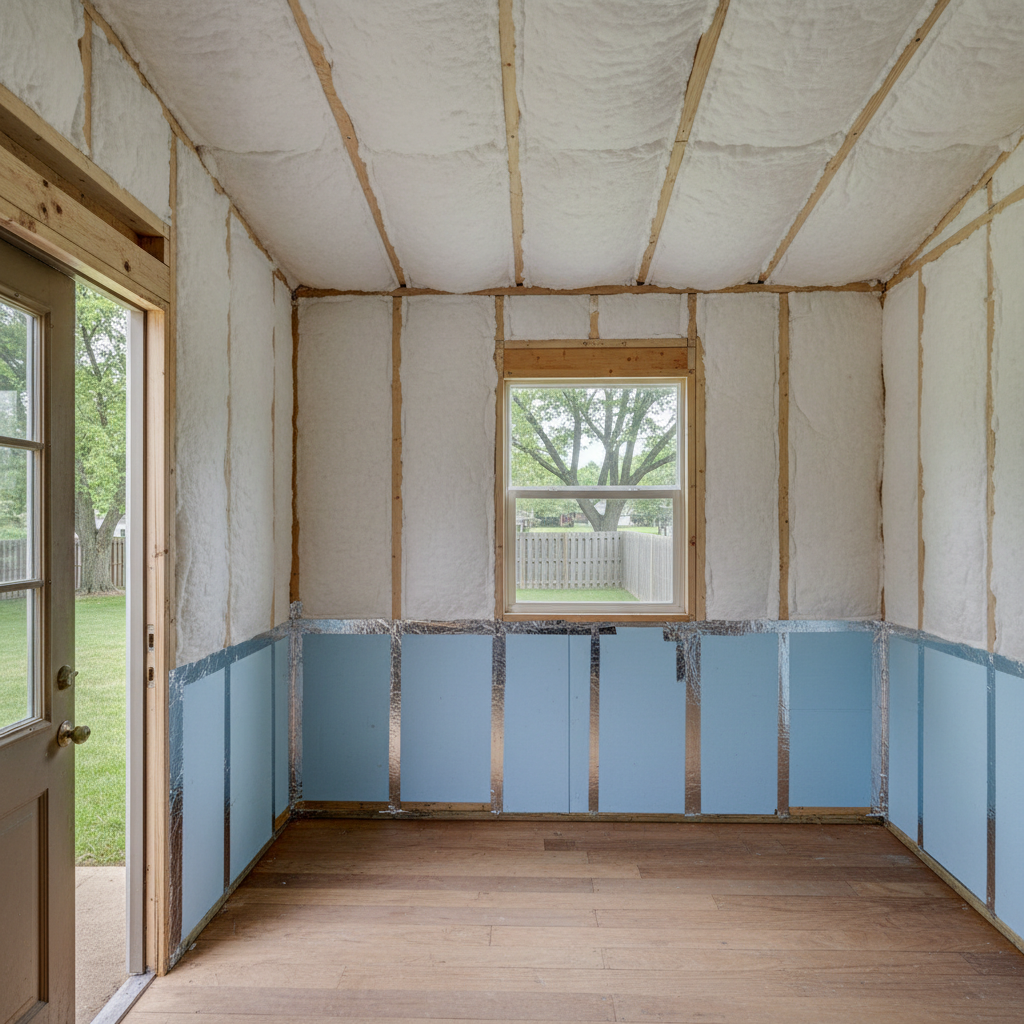
So, you're looking to insulate your shed. Good call. Whether it's for a workshop, a fancy potting shed, or just to keep your tools from freezing solid in a typical Wheaton winter, insulating it makes a huge difference. But what's it actually going to cost you? That's what I hear a lot, and it's not always a simple answer, but I can give you some real numbers and what drives them.
What Makes Shed Insulation Prices Jump Around?
A few things really push the price up or down. It's not just about the square footage, though that's a big one.
- Shed Size and Type: Obviously, a bigger shed means more material and more labor. A standard 8x10 shed is going to be way cheaper than a 12x20 with a high ceiling. Also, is it just a basic box or does it have a bunch of windows, complex framing, or an attic space? Those details add time and complexity.
- Insulation Material: This is probably the biggest factor. You've got options, and they all have different price points and R-values.
- Existing Conditions: Is the shed brand new, or is it an old one with exposed studs? If we have to remove old, moldy siding or deal with uneven framing, that's extra work. Access matters too; if we can't get a truck close, or if it's tucked away in a tight backyard like some of the older homes in the Lincoln Center area, that can add a bit to labor.
- Vapor Barrier Needs: In our climate, a good vapor barrier is crucial to prevent moisture issues, especially if you're heating or cooling the shed. That's an added material and labor cost.
- Finishing Touches: Are you just insulating, or do you want drywall or plywood over it? Most folks just want the insulation, but some want a finished interior.
Typical Cost Ranges for Shed Insulation in Wheaton
Alright, let's talk numbers. For a professional job, you're generally looking at a range, but I can give you some specifics based on common materials.
For an average 8x10 shed (that's 80 square feet of floor space, but you're insulating walls, ceiling, and maybe the floor), you're looking at roughly 250-350 square feet of surface area to insulate.
- Fiberglass Batts: This is often the most budget-friendly option. For an 8x10 shed, you'd be looking at around $800 to $1,500. This includes R-13 or R-15 for walls and R-19 or R-30 for the ceiling, plus a vapor barrier and labor. It's good, but you have to be careful with moisture and air sealing.
- Blown-In Cellulose or Fiberglass: If your shed has enclosed wall cavities or you're building new, blown-in can be a good option. It fills cavities well. For an 8x10, expect something in the $1,000 to $1,800 range. It's often denser and provides better air sealing than batts if installed correctly.
- Spray Foam (Open-Cell): This is a premium option but offers fantastic air sealing and R-value. It's great for sheds you plan to heat or cool consistently. For an 8x10, you're probably looking at $1,800 to $3,000+. It's more expensive per square foot, but the performance is top-notch. Closed-cell foam would be even higher, but usually overkill for a shed unless you're building a freezer.
These numbers are for the insulation and installation only. If you need framing modifications, electrical work, or interior finishing, that's all extra.
What Should a Good Quote Include?
When you get a quote from Elite Insulation Company, or anyone else, make sure it's clear. It should detail:
- Specific Insulation Material: Brand, type (e.g., R-13 fiberglass batt, open-cell spray foam), and R-value.
- Areas to be Insulated: Walls, ceiling, floor, doors, etc.
- Vapor Barrier: Is it included? What type?
- Prep Work: Any necessary cleaning or minor repairs to ensure proper installation.
- Labor Costs: Clearly itemized.
- Cleanup: What happens to the mess?
- Warranty: On materials and labor.
A good quote won't just be a single number. It'll break down the scope of work so you know exactly what you're paying for.
How to Avoid Overpaying for Shed Insulation
Nobody wants to get ripped off. Here's how to make sure you're getting a fair deal:
- Get Multiple Quotes: This is a no-brainer. Talk to at least three reputable contractors. You'll quickly see if one is way out of line.
- Understand the R-Value: Don't just compare prices. Compare the R-value you're getting for the money. A cheaper quote with lower R-value might not be a better deal in the long run if your shed is still drafty.
- Ask About Experience: Insulating a shed isn't rocket science, but doing it right, especially with spray foam, takes skill. Ask about their experience with sheds specifically.
- Check References/Reviews: See what other folks in Wheaton think.
- Be Clear About Your Needs: If you just want to keep things from freezing, that's different from wanting a temperature-controlled workshop. Make sure the contractor understands your goal so they can recommend the right solution without overselling you.
Insulating your shed is a smart investment, especially around here. Just do your homework, get solid quotes, and you'll be set.