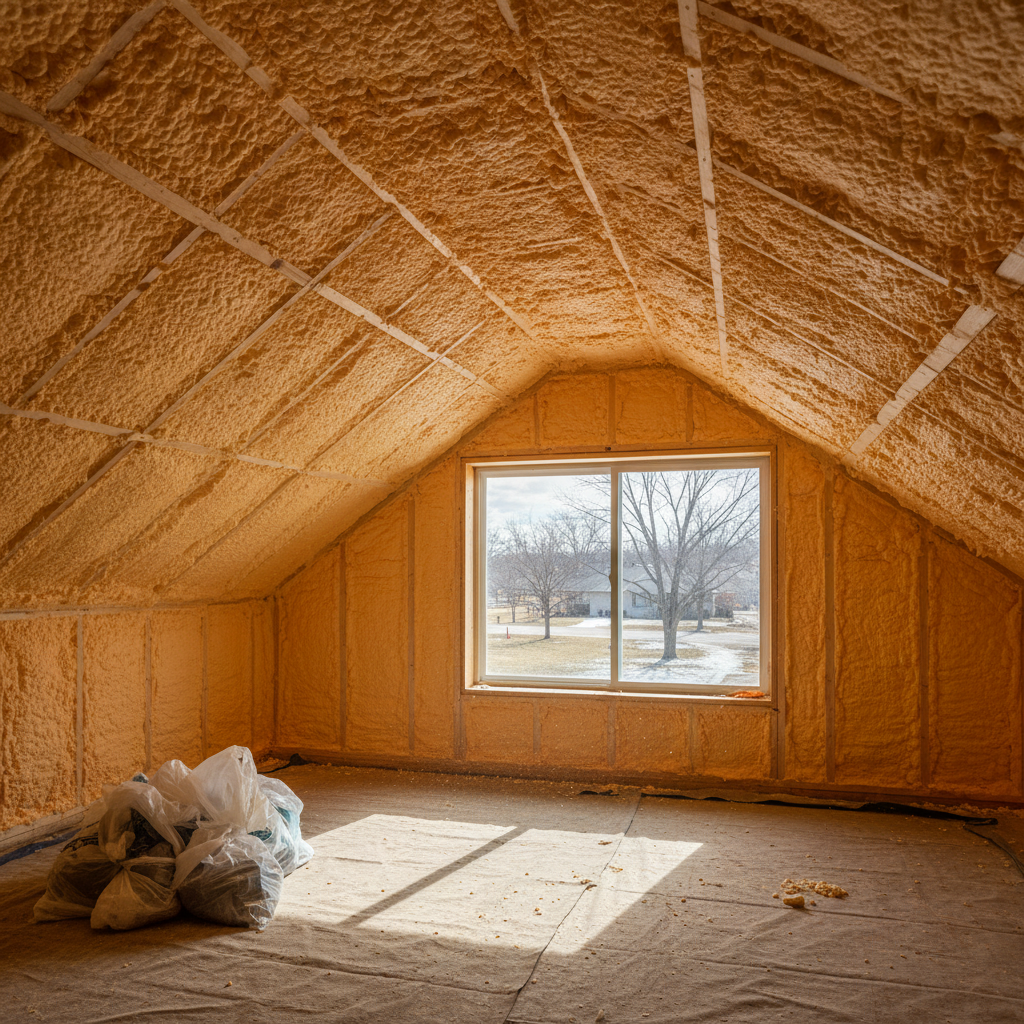
You are ready to upgrade your home's insulation, and closed-cell spray foam is something you are looking at. This is a smart move. Closed-cell spray foam is a fantastic product. It offers superior air sealing and a high R-value. But here in Wheaton, Illinois, with our big temperature swings and humid summers, timing is important when it comes to getting the Closed-Cell Spray Foam installed right. This also makes sure the Closed-Cell Spray Foam lasts.
When Is the Best Time to Schedule Closed-Cell Spray Foam Installation?
The best time for Closed-Cell Spray Foam Installation in Wheaton, Illinois, is usually spring or early fall. This is because the ideal temperature range for applying most Closed-Cell Spray Foam is between 60°F and 80°F. This temperature range is for both the air around the area and the surfaces we are spraying. Some manufacturers might allow a slightly wider range, like 41°F to 86°F. But that 60-80°F window is where you will get the best results for your Closed-Cell Spray Foam.
Our Wheaton springs and falls often give us these good conditions. It is not too hot, and it is not too cold. This allows the Closed-Cell Spray Foam to expand evenly. It also helps the Closed-Cell Spray Foam adhere properly to your home's surfaces. This is true whether it is your attic sheathing or your basement walls in Wheaton.
How Weather Conditions Affect the Closed-Cell Spray Foam Work
You might think that the weather outside does not matter once the insulation is inside your walls. Actually, it matters a lot. The temperature and humidity on the day of the Closed-Cell Spray Foam application are important for the chemical reaction that creates the foam.
Dealing with the Cold (Our Wheaton Winters)
Our winters here in Wheaton can be very cold. Average low temperatures in January are around 17°F. Applying Closed-Cell Spray Foam in cold weather presents several challenges:
-
Poor Adhesion: Cold surfaces can stop the Closed-Cell Spray Foam from sticking properly. This can lead to gaps and coverage that is not even.
-
Reduced Expansion: The chemical reaction for the Closed-Cell Spray Foam slows down in the cold. This means the foam might not expand to its full potential. This will give you less insulation value from your Closed-Cell Spray Foam.
-
Incomplete Curing: Cold temperatures can cause the Closed-Cell Spray Foam to become brittle. It might also not cure completely. This impacts how well the Closed-Cell Spray Foam works and how long it lasts.
-
Condensation: When cold surfaces meet the warmer Closed-Cell Spray Foam, condensation can form. This also hurts the adhesion of the Closed-Cell Spray Foam.
We can still spray Closed-Cell Spray Foam in colder weather sometimes. But it requires extra steps. We might need to heat the job site and the materials to get everything within that ideal temperature range. This adds complexity and cost. It is often better to wait for milder conditions if it is not an emergency for your Wheaton home.
Handling the Heat (Those Muggy Summers)
Then there are our Wheaton summers. July is our hottest month, averaging 84°F. It can get very muggy. High temperatures and humidity also cause problems for Closed-Cell Spray Foam:
-
Too-Rapid Expansion: If it is too hot, the Closed-Cell Spray Foam can expand too quickly. This makes it hard to apply the Closed-Cell Spray Foam evenly. It also makes it hard to achieve the correct thickness.
-
Curing Issues: Very hot surfaces can pull heat away from the Closed-Cell Spray Foam. This can cause it not to cure completely. This can lead to issues like off-gassing, which is a chemical smell. The Closed-Cell Spray Foam can also shrink and crack.
-
Material Storage: The chemicals for the Closed-Cell Spray Foam need to be kept within a specific temperature range, often 70-80°F, before application. Hot weather makes this harder to control for the Closed-Cell Spray Foam materials.
A professional installer from Elite Insulation Company knows how to manage these conditions, just like with cold weather. We will monitor substrate temperatures with tools like infrared thermometers. We will also adjust our techniques for the Closed-Cell Spray Foam. But avoiding the extreme heat and humidity of mid-summer can make for a smoother and more reliable Closed-Cell Spray Foam installation in Wheaton.
Protecting Your Closed-Cell Spray Foam Investment Year-Round
Once your Closed-Cell Spray Foam is installed and properly cured, it is very durable. It requires very little maintenance. It becomes a permanent part of your home's structure. It seals out air leaks and provides consistent thermal performance for many decades. The full curing process for Closed-Cell Spray Foam usually takes 24 to 72 hours. This depends on the conditions.
Here is what you can do to make sure your Closed-Cell Spray Foam continues to perform its best:
-
Do Not Disturb It: Avoid cutting into or damaging the Closed-Cell Spray Foam if you can. If you need to run new wiring or plumbing through an insulated area, it is best to talk with a professional. This makes sure the vapor barrier and seal are not compromised.
-
Address Leaks Promptly: Closed-Cell Spray Foam is resistant to moisture. But any big water leaks from your roof or pipes should be fixed right away. This prevents damage to surrounding materials.
-
Maintain Ventilation: Even with excellent insulation, proper ventilation in areas like attics, if they are not conditioned, and crawl spaces is still important. This helps manage moisture and air quality.
-
Regular Home Inspections: Include a quick check of your insulated areas during your yearly home inspection. Look for any signs of damage or changes. These are rare with Closed-Cell Spray Foam.
Choosing Closed-Cell Spray Foam is a big step towards a more comfortable and energy-efficient home here in Wheaton. By understanding the best times to install it and how to care for it after, you are making sure that investment pays off for many years. If you have questions about your specific project, call Elite Insulation Company. We are always happy to talk through the details for your Wheaton Closed-Cell Spray Foam needs.